Kamil Dossar
The human relationship with the Other is a constant tug of war between fascination and fear. Whatever is different or alien stands out. It is impossible to ignore and attracts the gaze to result in immediate sentiments of appeal and/or repel. Having grown up in the position of a foreigner, artist and director Kamil Dossar is deeply invested in the occidental relationship with whatever is unfamiliar.
In his most recent exhibition at Overgaaden in Copenhagen the strange and estranged aligne in the introduction of human-mimicking lizards, created with the help of AI-technology. Audiences are confronted not only with their own reaction upon encountering the alien, but also how this further connotates to ideas of monstrosity. In turn, the reflections evoked move beyond one’s own relationship with the stranger, to also include – in the words of Julia Kristeva – the stranger in ourselves.
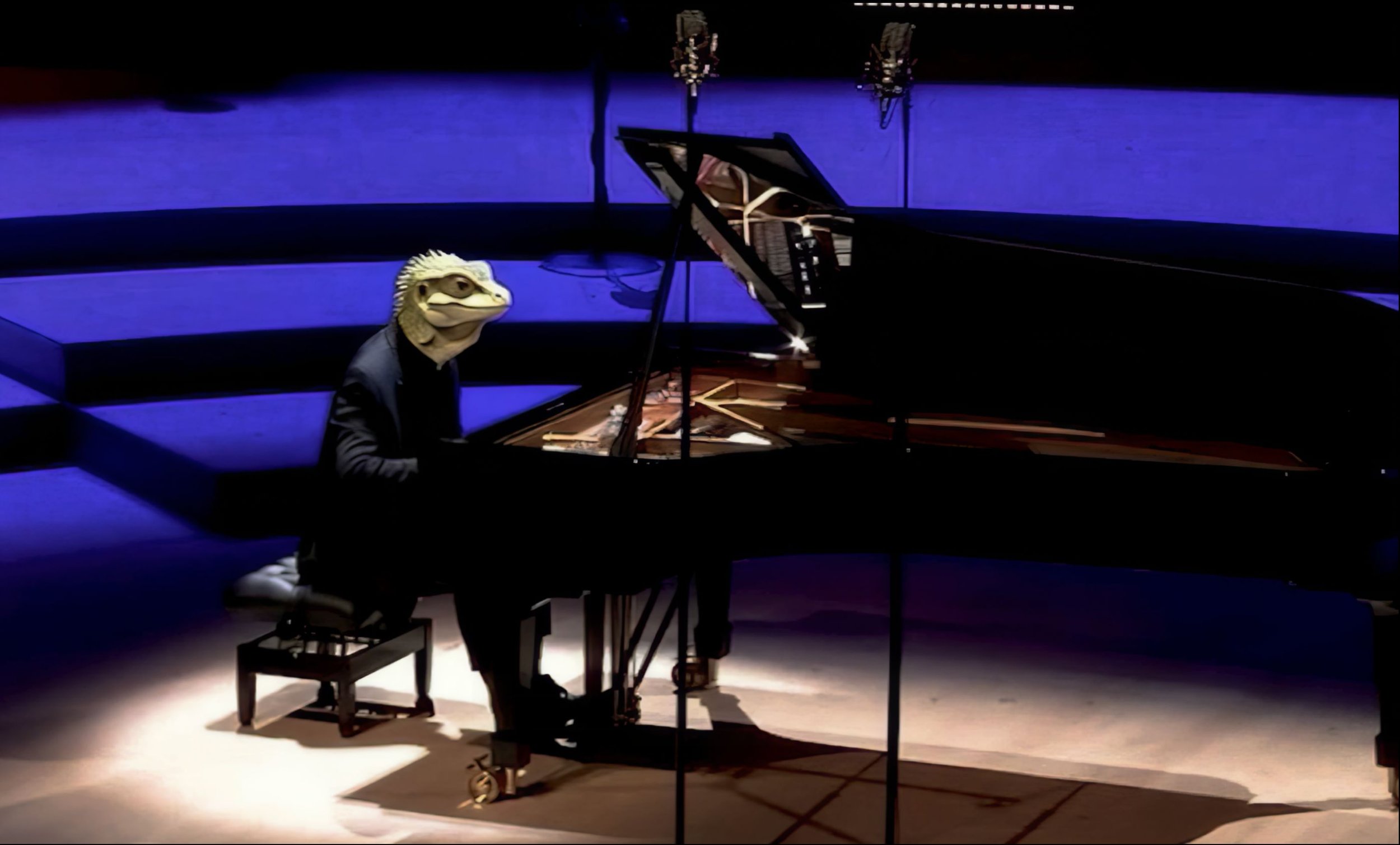
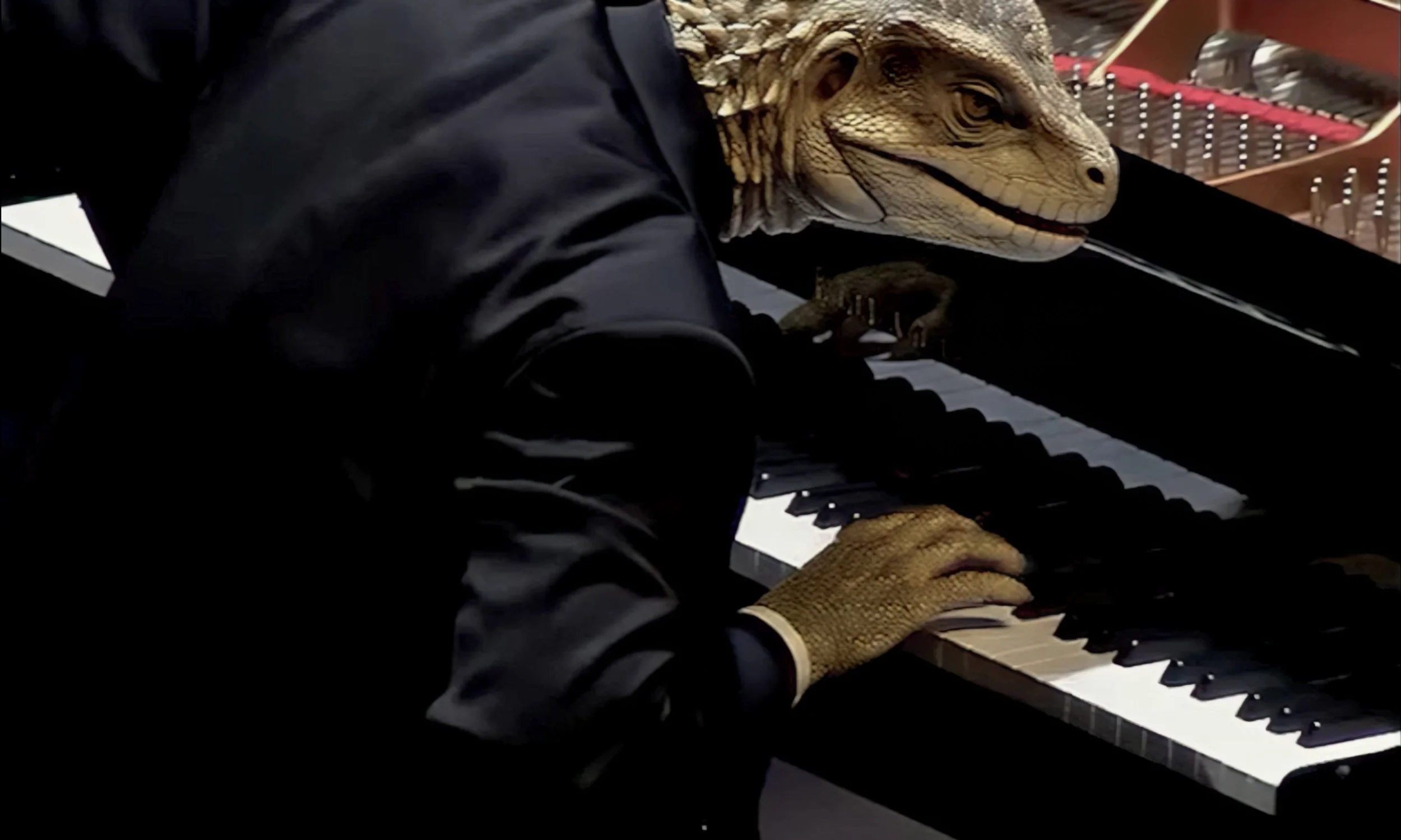
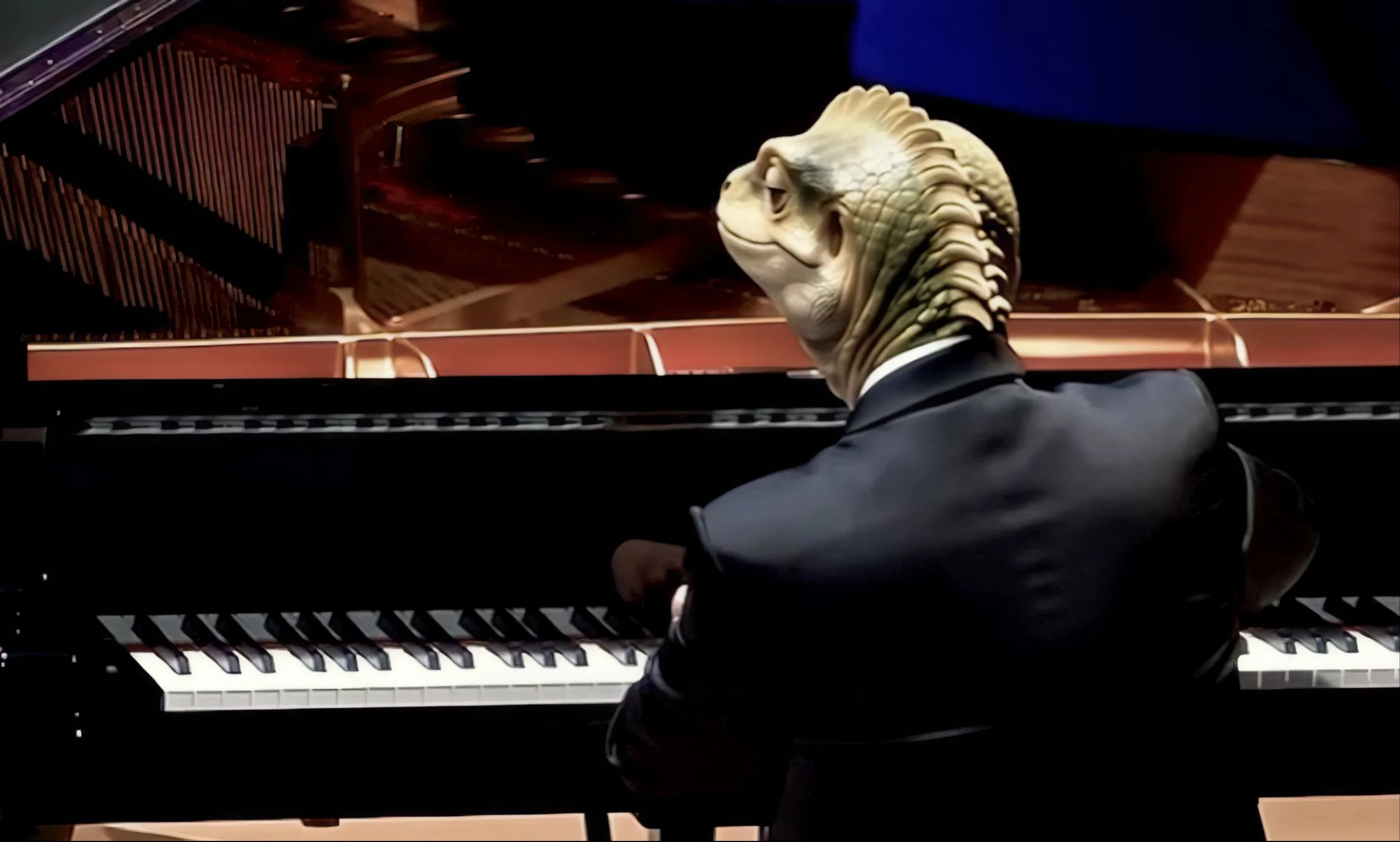
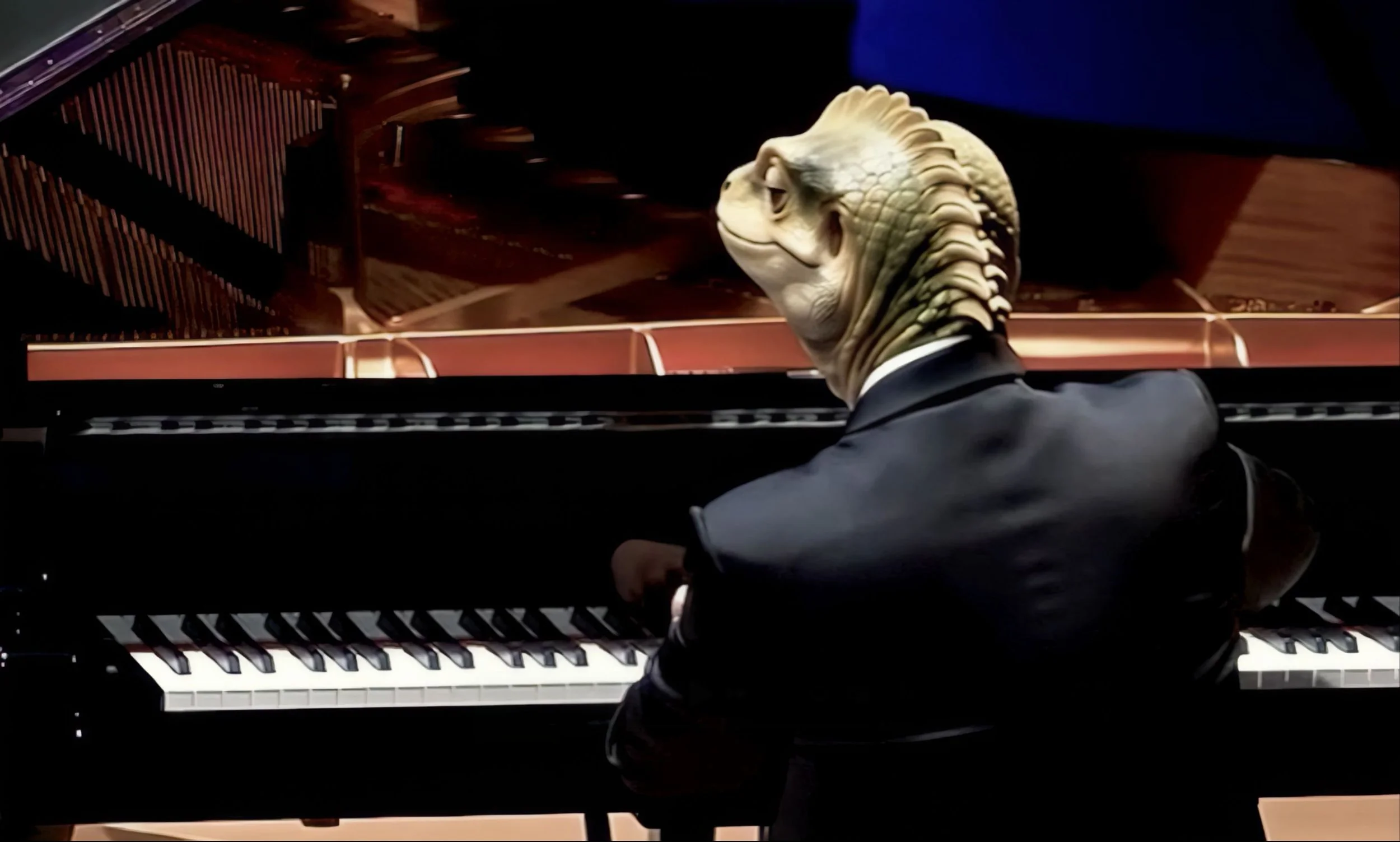
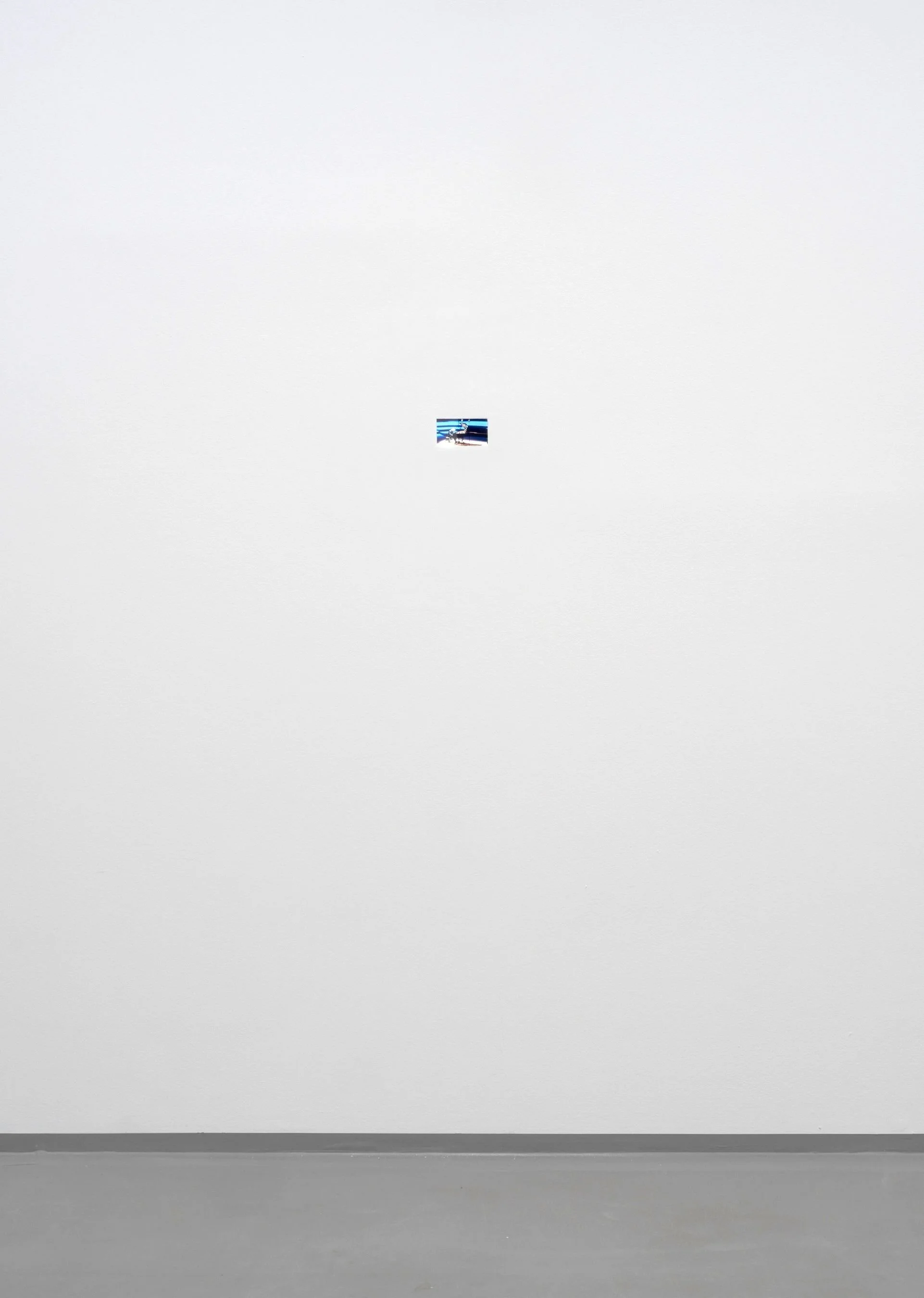
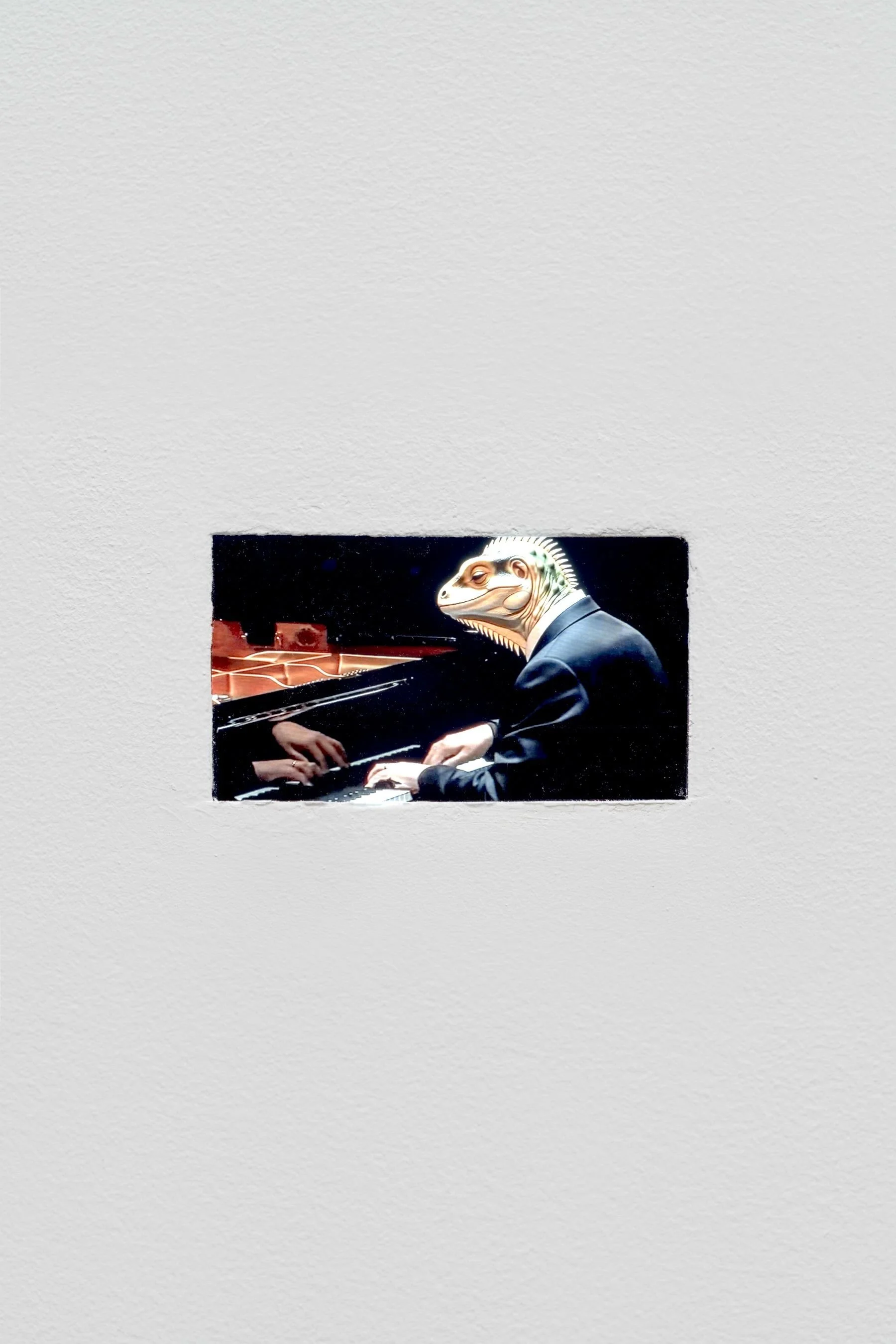
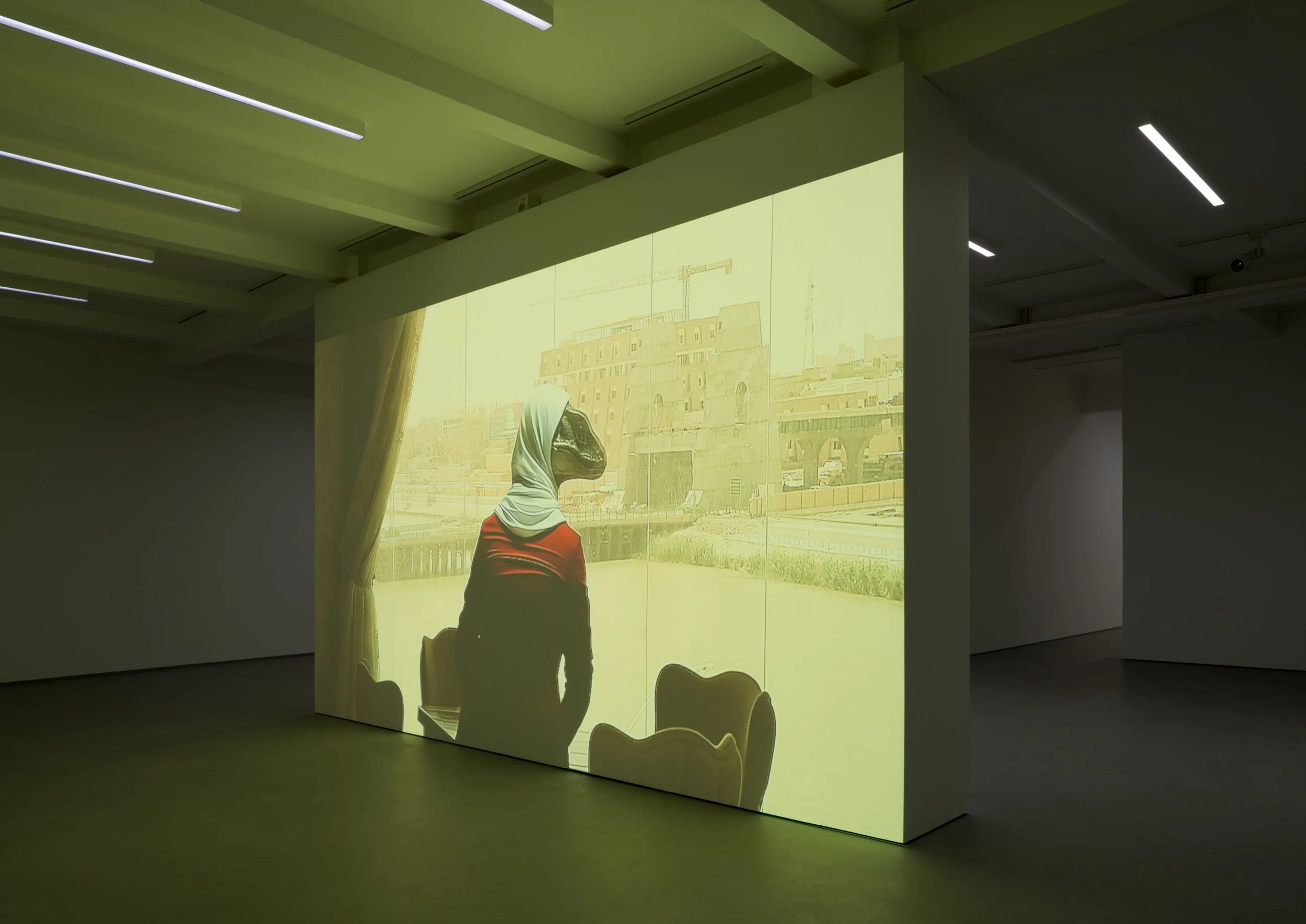
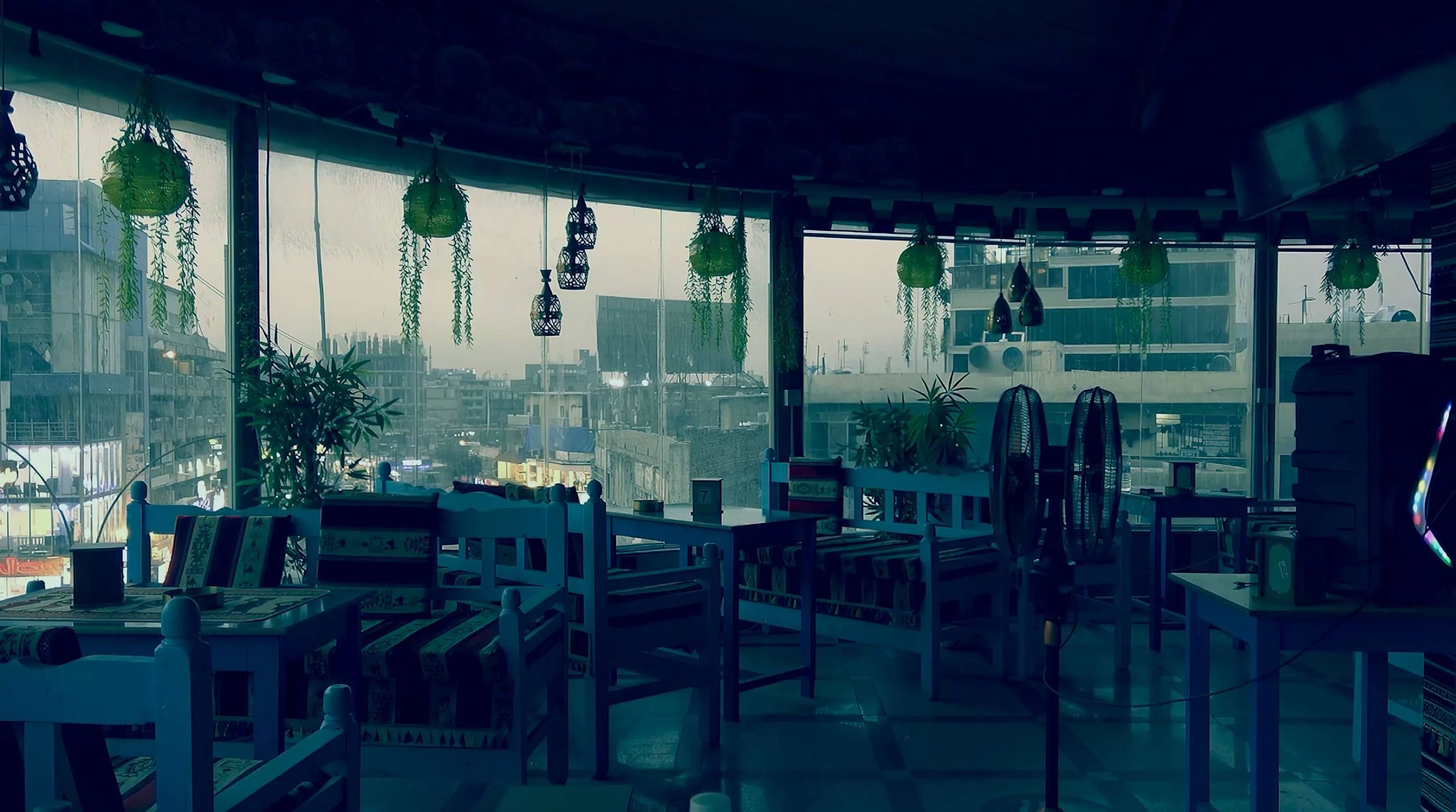
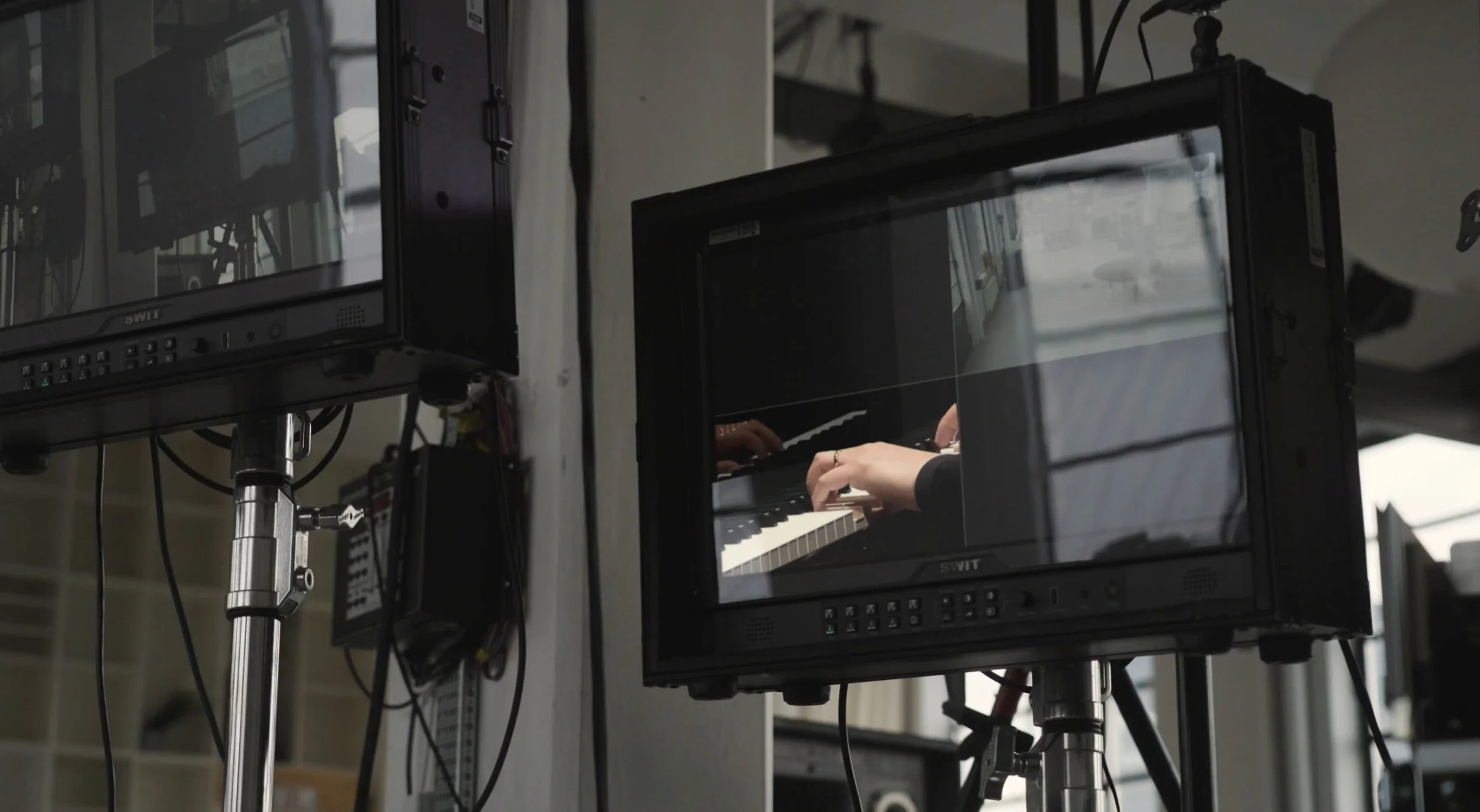
The exhibition at Overgaaden included two video works of lizards. Upon entering the space, the first thing one encountered is a video showing a lizard playing a Bach concert, further in, at the core of the exhibition, there’s another with a lizard doing housework in what seems like a fairly beautiful Hotel Restaurant with a city view. What inspired these human-acting, or maybe even human-replacing, reptiles?
On the one hand, I wanted to circumvent the exoticizing gaze beneath the AI replacement (in this case of human faces with that of reptiles), not to reinforce the pre-existing structures of othering, but to critique an exoticizing gaze by monstrously, excessively feeding it. On the other hand, I couldn’t help but entertain the reptilian creature as the representative of the “the Other”. The inherent genericness it embodies points back to the “alien” in Western consciousness.
The reptilian creature strikes an ever-present chord of the alien invasion trope, a paranoia of something from the outside infiltrating so-called civilizations and replacing it from within. Octavia Butler posits the idea that the fantasy of alien abduction or captivity narrations as a shadow projection of the slave trade colonialist’s abduction of the African people to the Americas. A theme that is present in most of her works. The fear is a confession. Even the most archaic notion of the alien; and the monster, was also depicted as reptilian. Accessing this paranoia, I wanted to flip this narrative and present a parallel: a reality where native reptilian civilizations are invaded and colonized by humans. The post-war Iraqi urban landscapes that flicker with power outages are paralleling to such fantasies.
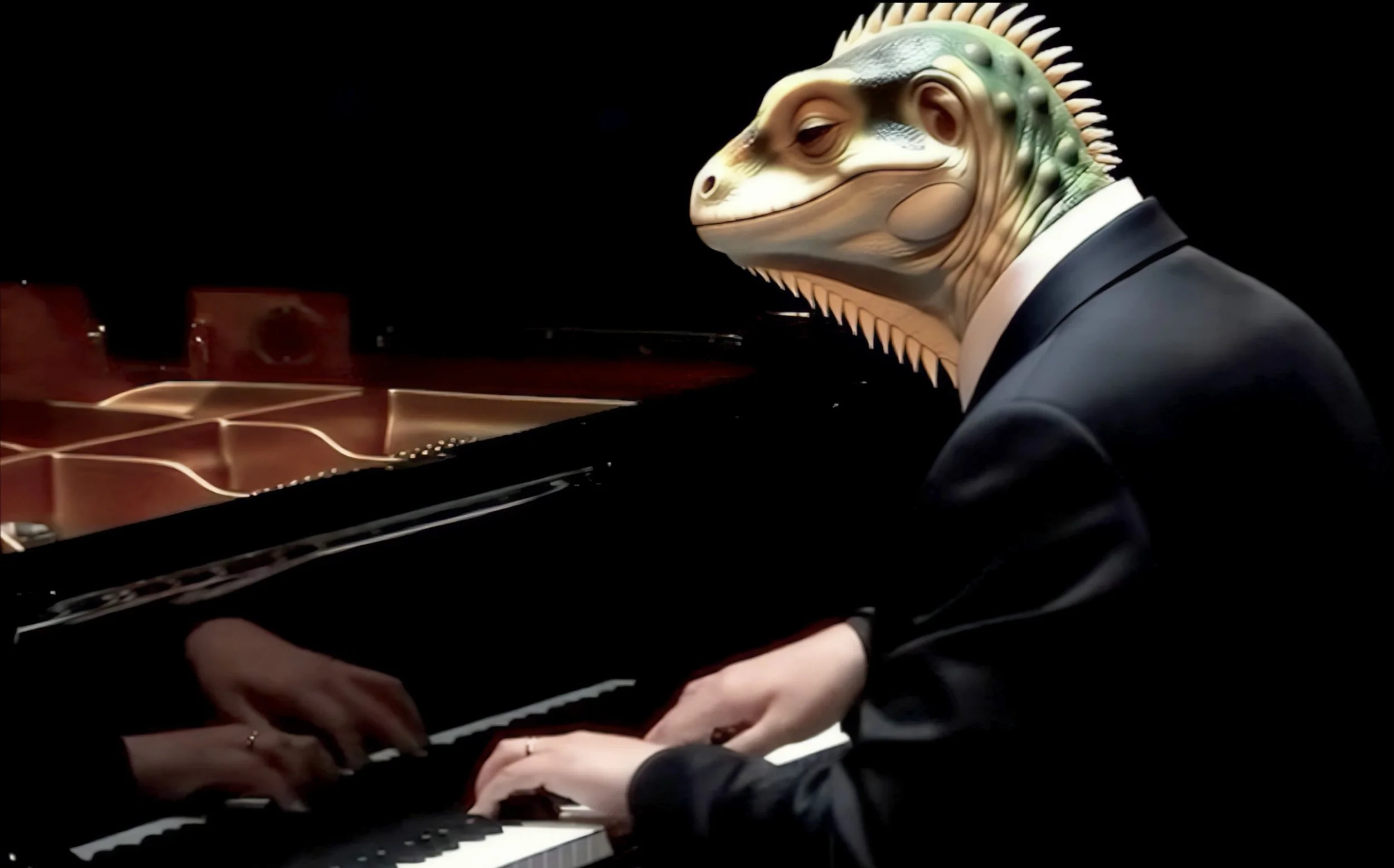
“The reptilian creature strikes an ever-present chord of the alien invasion trope, a paranoia of something from the outside infiltrating so-called civilizations and replacing it from within.”
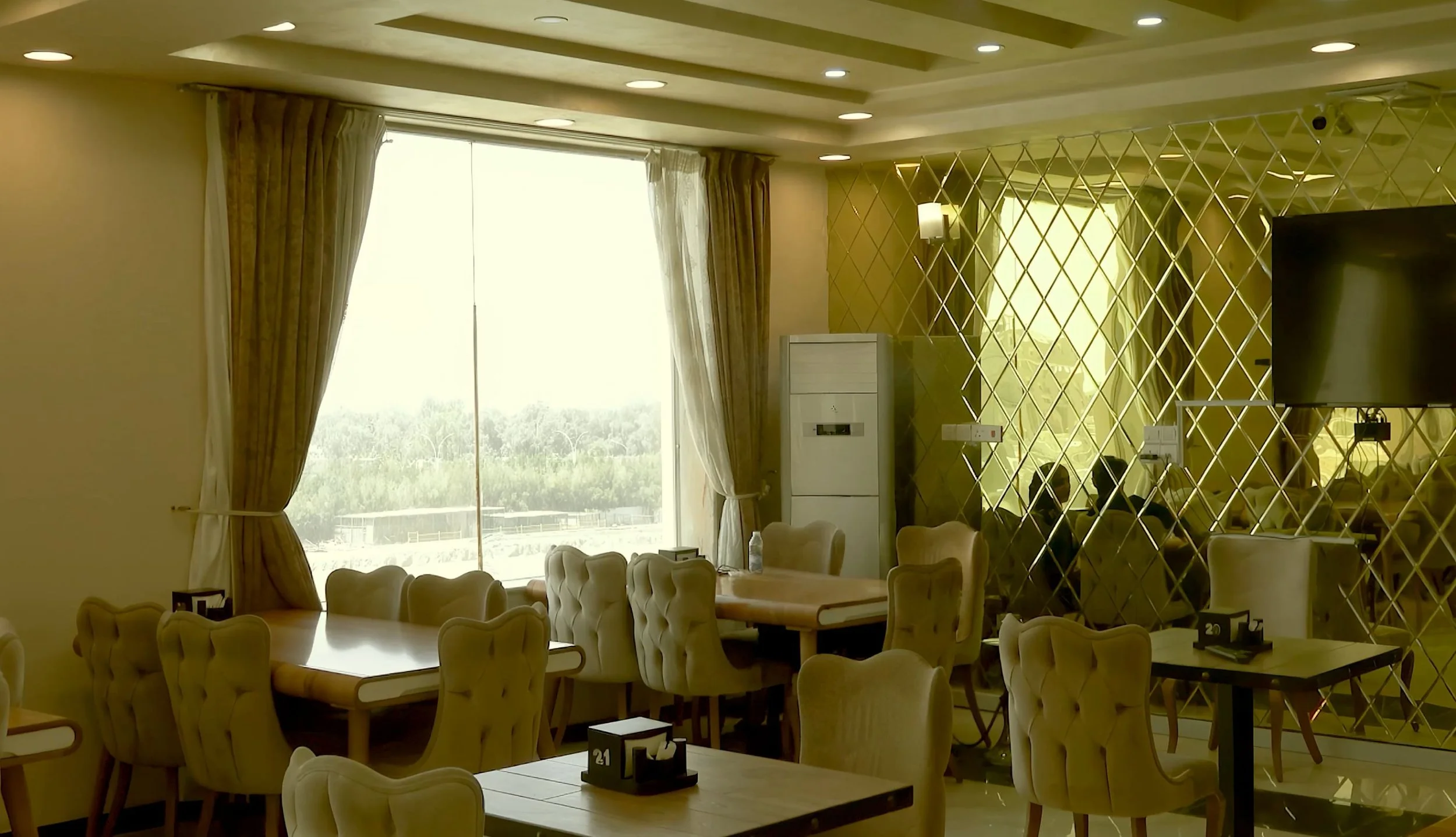
The choice of postwar Iraq as the surrounding scenery of the work further underlines these decolonial connotations. As a country that was quite recently more or less destroyed by Western warfare, the Iraqi landscape reminds the audience that these colonial and imperialist dynamics are still very much alive in our present. On the other hand, I also imagine you wanted to reference Iraq not solely as a place of victimhood, but also a somewhere-in-its-own-right. How do you balance these two points of interest?
Iraq was first and foremost a personal calling. After my deceased father who was a politically exiled communist from Basra in Iraq, living a new life in Denmark became a collision of worlds. A profound alienation evolved within our family accelerated by 9/11, islamophobia, culture wars sweeping Europe having Iraqis subsuming the 21st century antagonists of liberal democracies in the post USSR vacuum, where the enemy at the time was well defined. I don’t know, a lot of stuff happened in that time which mystified my relation to Iraq. A conditioning. A gaze. I think this is central to my practice today. When the war finally ended, I went back to Iraq for the first time, partly to finish what my father never succeeded to do, but most importantly to roam around, curse-breaking and splinter the images I have created about it. And the shards are somehow what I transmute into art. In that way, it’s not about portraying Iraq the “right” way or not, but more to do about my own orientalist gaze, conditioned eye in the meeting of the real. Two worlds colliding. One from the core of empire, the other in subjugation of it. It’s a very fruitful place to engage for me, and it has truly been a spiritual experience. Just the mere fact to find a whole breathing family tree in adult life was transformative on so many levels.
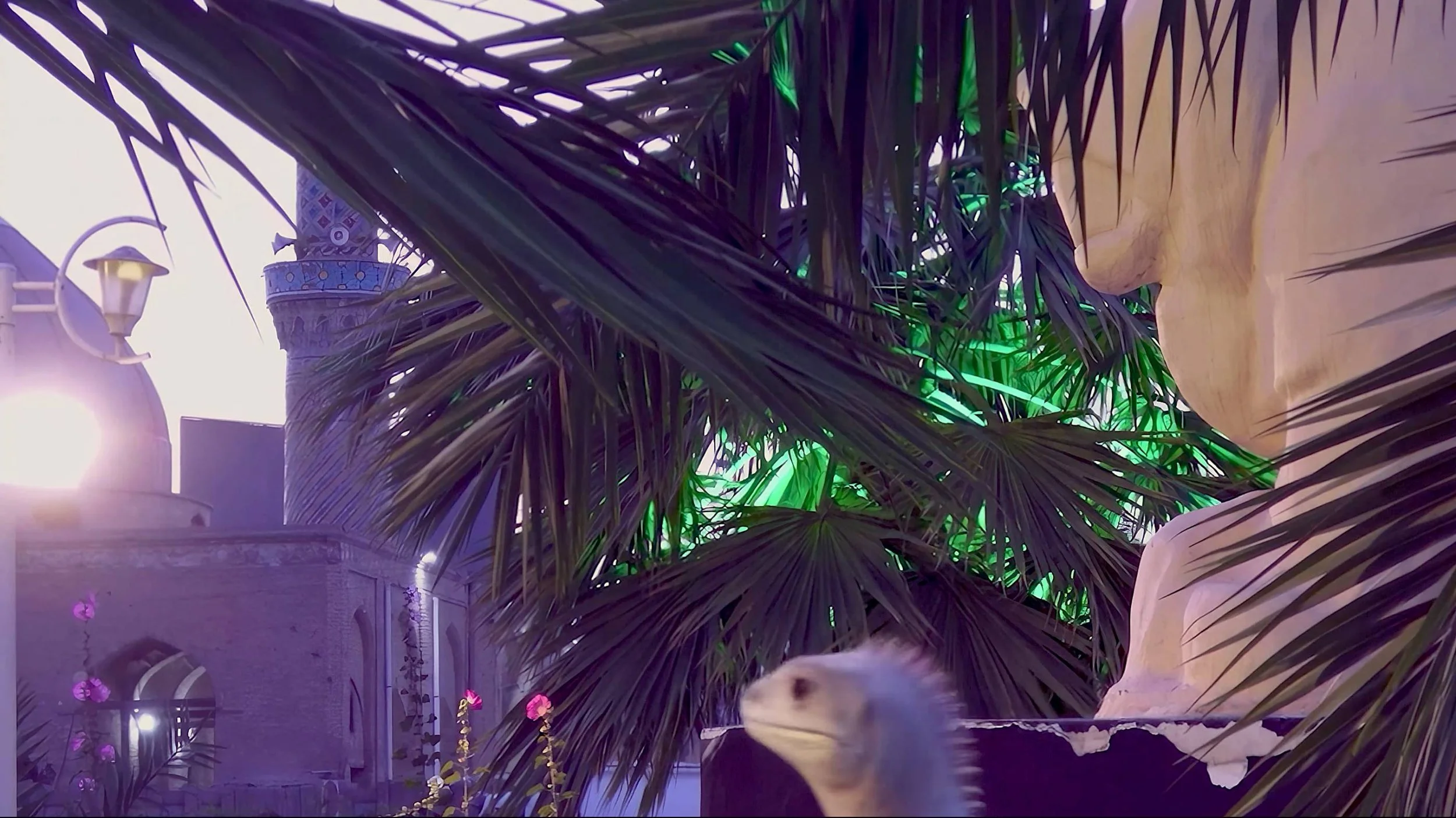
“It’s not about portraying Iraq the “right” way or not, but more to do about my own orientalist gaze, conditioned eye in the meeting of the real. Two worlds colliding. One from the core of empire, the other in subjugation of it.”
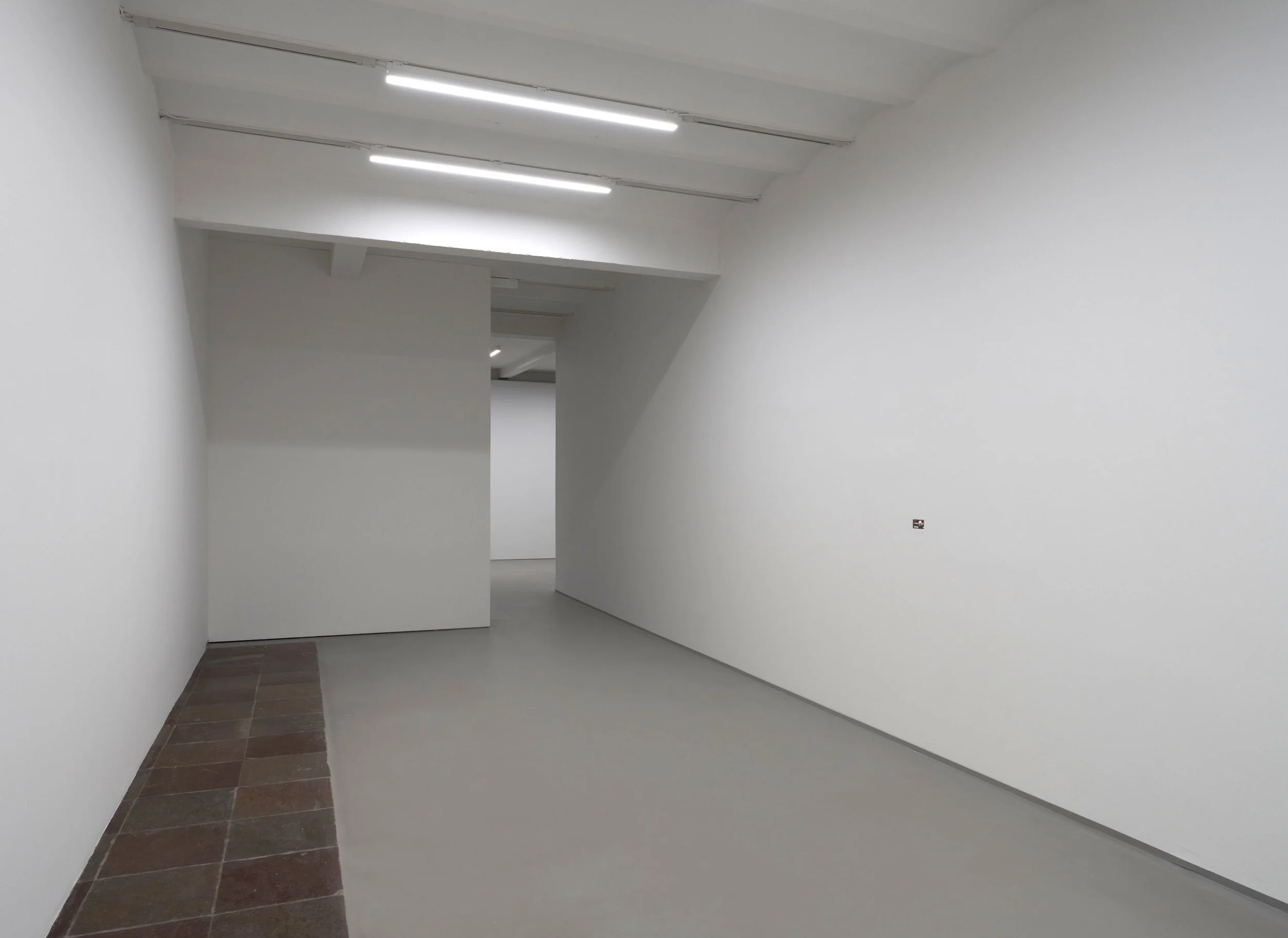
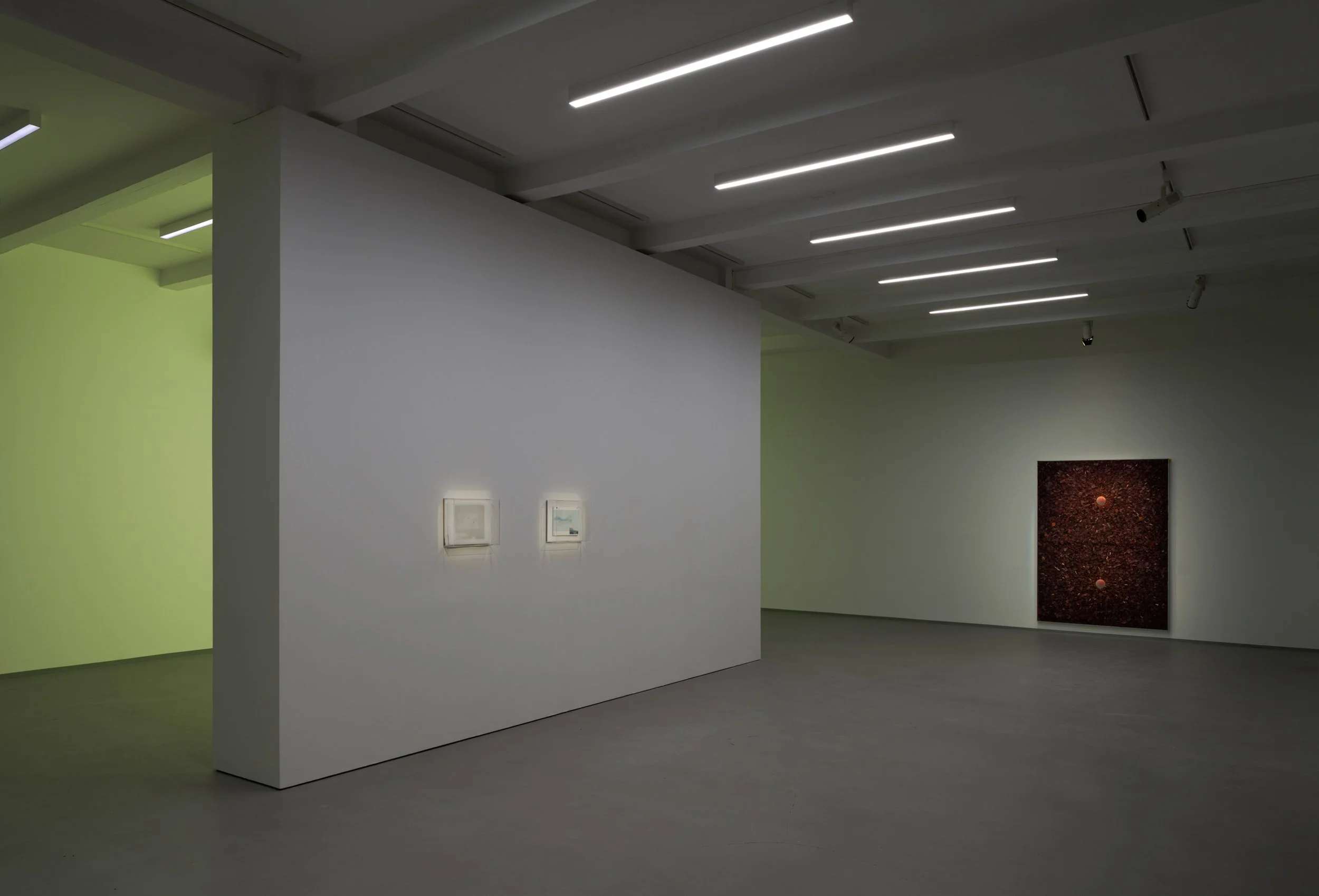
Your practice unfolds in a range of mediums, in addition to the aforementioned video works, your exhibition also included collages and a canvas relief of rose petals. In other exhibitions you’ve also worked with paintings, sculpture and installation. How would you say this variation of mediums define your practice?
Since from a young age I started drawing which made me relatively skillful in the realm of hyper-realism. However, the older I became abstraction became a deep necessity - it is somehow the common development of most painters today. Now, I found myself somewhere in between constantly negotiating the image. What I find interesting is to exercise the suspension between noise and representation. What is familiarized, and what slips out of recognition? Is it purely sensorial, or do we perceive through a pre-conditioned gaze? And if so, what underlying machinations define the way we perceive form? I think my interest in paintings is fundamentally about this dialectical intersection. It allows me to work with form poetically and yet have a leash on our political/ideological inclinations. And collage and paintings really allow for this to happen more than film can do. Going from one medium to another also reveals their intricate relations between each other, expanding the perspective in ways that allow for me to move more freely in an allegorical realm.
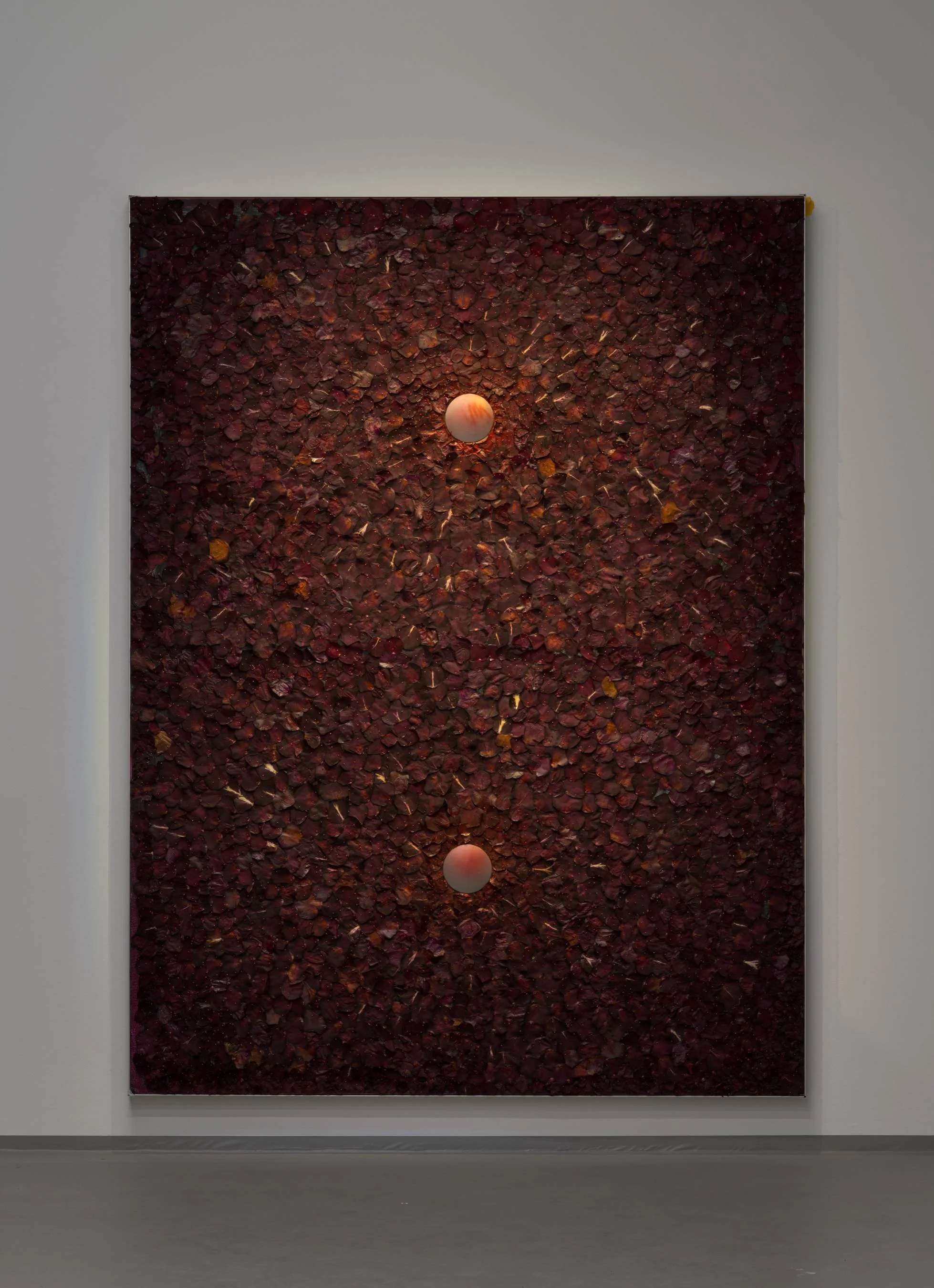
I fell absolutely in love with the rose petal canvas. The highly tactile and fragile rose petals, put together to form such a monumental work. Could you elaborate on the backstory of this specific work?
Thank you! That truly makes me happy and keeps my work going. I think, the idea behind the work is a direct extension of the previous question about my work with paintings. However, I think this piece has become emblematic to my interest in pointillism. For me pointillism - not from the vein of the impressionists like Georges Seurat, are the most direct and clear approach to make an image that suspends image and noise. For me it’s almost like a computational interest. The red rose has many associations across the globe, and specifically in Iraq it is the national flower. However, I was not interested in those cultural signifiers, but more how a loaded object as the rose could break free from its category. By disintegrating and reassembling it anew, I could perhaps create a naked form of association allowing us to access strange, almost monstrous bodies.
“
For me pointillism - not from the vein of the impressionists like Georges Seurat, are the most direct and clear approach to make an image that suspends image and noise.”
Central to the exhibition at Overgaaden, was the exploration of ‘otherness’, connected to your own experience as the child of a political refugee. For me the lizards in their strangeness and estrangement in relation to their environments evokes association to Julia Kristeva’s notion of the stranger/foreigner (L’étranger), where she argues that there is both a vulnerability and a power in being a stranger/estranged from one’s surroundings. How do you see this double connotation?
I think, looking back at my father’s condition, his alienation, I have learned that losing a language is another way of losing oneself. Who are you calling when no one is returning your call? And so, if identity is so tightly woven into the fabric of language, what does it mean to lose that grip? The ineffable dimension exists right there, at the threshold, outside semiosis. At least, that thought made me so obsessed with the monster, the estranged. Insofar the monster is analogous to the quality of ineffability. At most, the closest way to perceive it [the monster], is by turning it into an allegorical mirror, reflecting reality antithetically. It has subsumed and fixed all societies' collective horrors, pains and absurdities, so that we could find a consensus of its abstraction. Make an image comprehensible enough. Make it Iraqis and so on. It falls short because it looks back at us. And I think that place has the power to renegotiate, splinter pre-conceived ideas, even worlds. The stranger has that power in the same vein.
To create the lizard videos, you’ve made a custom-designed script using «deep fake» and AI. However, disputed these tools are making their way into the arts, both challenging traditional craft and fostering new possibilities. As someone adopting these technologies, how do you see them in relation to arts, for better and/or for worse?
I have no doubt in mind that AI is like a mirror reflecting society, and right now, living within the paradigm of a disintegrating capitalist world order, AI will work accordingly, accelerating, perhaps even in a Nick Landian fashion. However, AI is not fixed to an ideology, that conclusion would be too easy. There’s deep emancipatory potentiality in AI if engaged in more utopian ideas of state craft or arts. For now, we are still locked in on profit-incentivized structures in a profound exhaustion in visual culture, where vulgarity is superseding the “adored image”, as I think correctly reflected by Dean Kissick. So, there is a lot to criticize and be afraid of, not to mention surveillance and thought-crime technologies that are slowly being utilized militarily. However, what I find interesting with AI is to work with it as a mirror. Or perhaps something that can blur the lines between the so-called “real” and the simulated, create anomalies to obscure our perception of the image, so that it may reveal its illusory, perhaps even fragile structures that upholds the foundations of belief systems. There might be a way to work with AI as an accelerant for revolutionary artistic work. At least it would be my aim to try to reach that place, whatever and how that may look like.
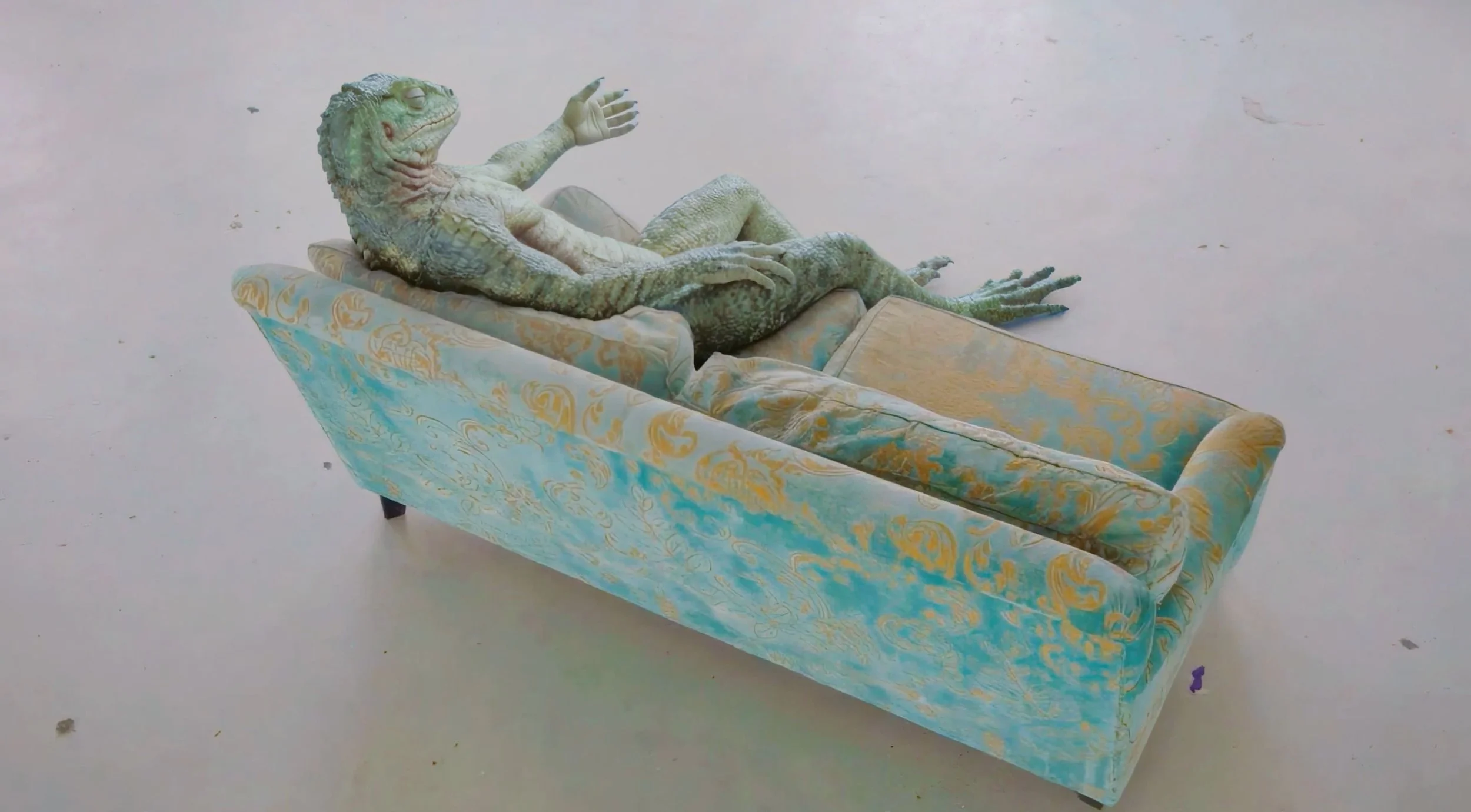
The exhibition at Overgaaden has now closed, but much of its content will reemerge in your upcoming cinematic debut. Your film Fahrenheit, which continues the story of the lizards, will have its world premiere during CPH:DOX this Spring. How have you experienced the process of moving from the spatial exhibition format to two-dimensional cinema?
That is indeed a collision. The space created is now cinematic, so I must engage with the film in a different way. When film stands as a body in space, we relate to the image spatially, with full self-awareness. The way you enter the room, how you observe surfaces and so on, there is a triangulation happening; the projection, the architecture and the body I believe, that dynamic necessitates a contract of seduction. However, I think seduction works differently in the cinematic experience. Seduction is important in both instances however I feel they need to be treated differently. And I think the difference is where it gets interesting for me. Fahrenheit is slowly undertaking a different shape from its previous dual form projection to a cinematic version, and it’s quite evident that introducing new elements in the film is needed for the fidelity to the original theme. Cinema truly has the power to expand worlds and engage with our senses in more intimate ways. Where spatial triangulation creates a dynamic of seductive self-awareness, cinema invokes almost an invasive form of amnesia.
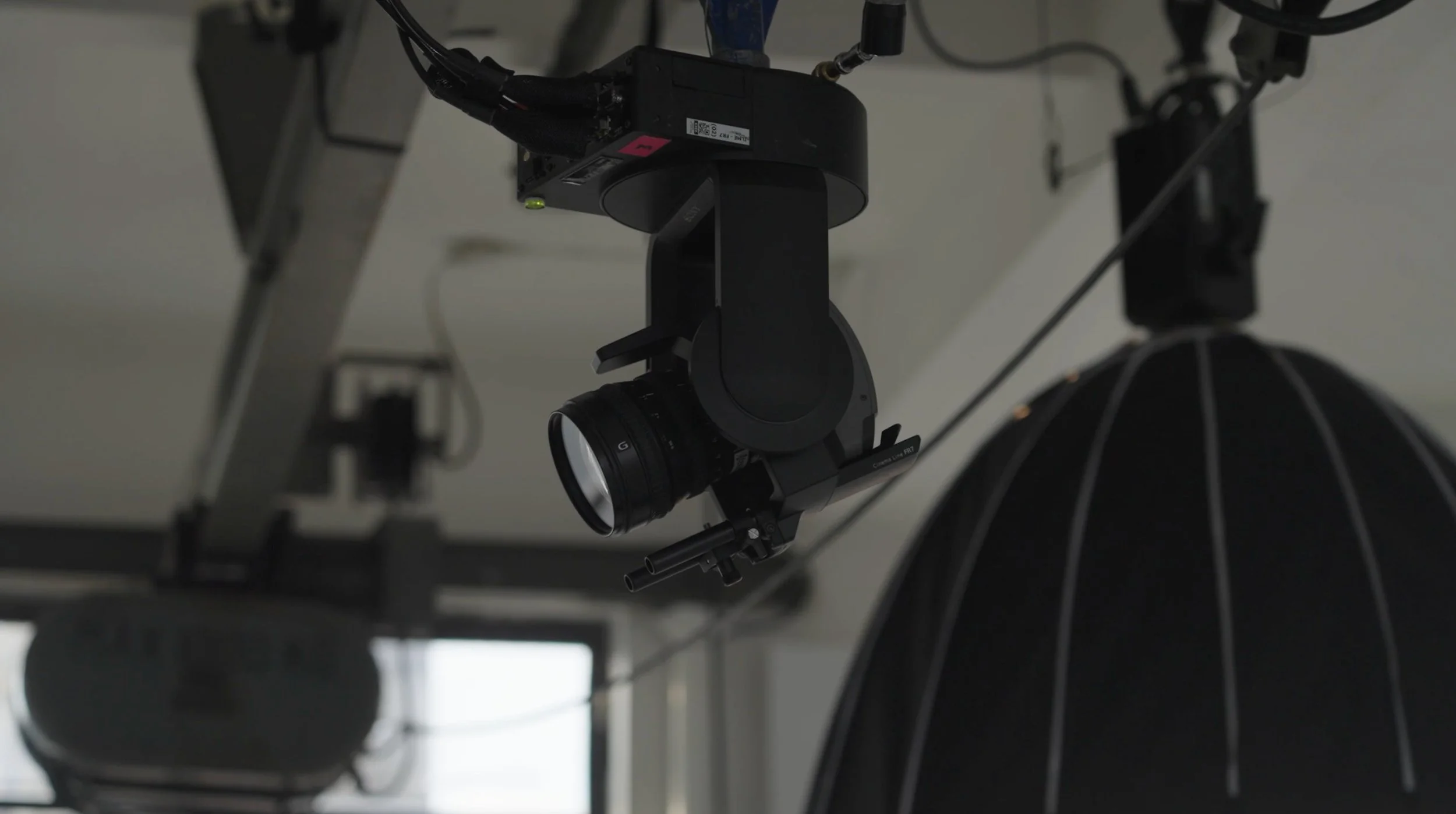
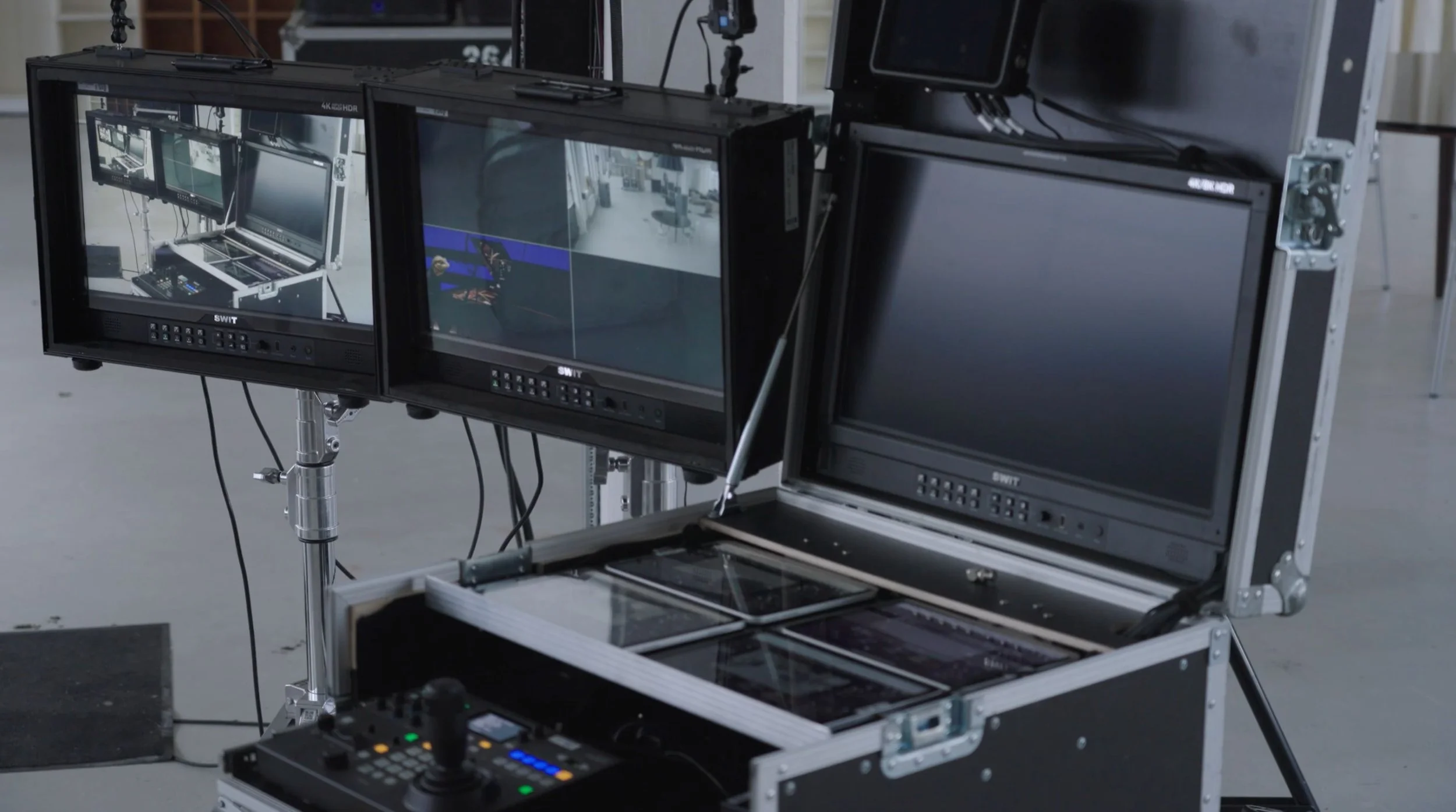
We become seduced into amnesiacs caught by the drama. We forget ourselves. And because my work is inherently about “gaze” I’m now introducing the camera as an integral element in the film, which was not needed in the spatial projection. Using AI together with real material, I’m blurring the line to create a more psychological and intimate dissection of my gaze of Iraq. There is something incredibly intoxicating to generate film production gear, cameras filming the genuine documentarian footage of a local waiter. It now suggests that she is just an actor. That everything is a setup. It is almost reaching the absurdity of AI mocking the world of hardware, like the oroboros devouring its own tail; AI creating the camera filming the waiter. Where this will take me is still an open horizon of exploration, however it is a delicate one.
Interview by Una Gjerde
What to read next